5 Reasons for Loving the Real Ale Ride
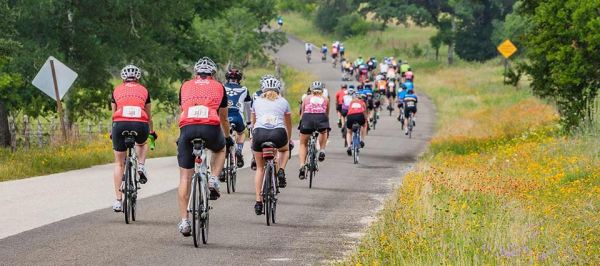
Bicycle Sport Shop’s elite racing team, Super Squadra, is no stranger to bike rides in Blanco (and, lets be honest, Real Ale beer). The team members have long made the roads surrounding this scenic little town a destination for training and races.
This year, Super Squadra will participate in the Real Ale Ride’s 15 and 30-mile routes. But team members won’t be racing, they’ll be there to ride alongside kiddos and offer support and encouragement. (Don’t hesitate to ask for a gentle push if a hill proves too daunting.)
Here, Super Squadra recounts five reasons why they love The Real Ale ride.
1) Bikes
With five different routes ranging from 15 to 80 miles, the Real Ale Ride caters to all kinds of riders. Bring your knobby tired or hybrid bike, your sleek racing machine, or your battery-powered e-bike—just bring a bike. Every route provides long sections of smooth and little-trafficked roads, undulating terrain, and breath-taking views. There’s no better way to spend a Saturday afternoon with a couple thousand of your cycling friends.
2) Beer
FACT: Fresh beer tastes better. And there’s no better way to maximize the lip-smacking pleasure of a crisp beer, than quaffing one straight from the source after a demanding bike ride. Whether you’re a hop-head (try the Axis IPA), a traditionalist (drink the Belgian-inspired White), or a non-discriminatory imbiber (Fireman’s Four remains a refreshing crowd pleaser), Real Ale makes a beer sure to please you.
3) Bathing suits
Did someone say swimming hole? The cool waters of the Blanco River, which parallels the final leg of the Real Ale Ride’s route, will help rejuvenate tired legs and salt-encrusted torsos. Take a dip at one of the river’s quiet pools, found at the stone dams along River Run Road and within the Blanco State Park. You’ll be glad you did.
4) BBQ
Brisket. Sausage. Pork. Chicken. Beans. Slaw. Pickles, onions, sauce, and more from Blanco’s Old 300 BBQ and pitmaster Ladd Pepper (yes, that’s his real name). All this BBQ goodness is why you ride bikes. This is why you feel blessed to live in Texas. Enjoy. You earned it.
5) Blanco
The hub of the hill country, that’s what they call this town. And when you roll out through the quaint town square, across the Blanco River, and onto the single-lane roads that wind through this wide-open and undulating landscape, you’ll understand exactly why. The hill country and Blanco, in particular, remain one of the world’s best places to swing a leg over a bike and start pedaling.
The Real Ale Ride will be held on May 20. Register here to join in the fun!
By Ian Dille
Ian currently works as a freelance journalist and is a contributing writer for a variety of publications, including Outside magazine, Texas Monthly, and Bicycling. Ian is a founding member of Super Squadra and serves as the Team Manager.
IZIP E-bike for a Day
Or, the day I used an IZIP for my commute and instantly starting planning my life on an electric bike.
I’ll come clean. The IZIP wasn’t my first time. Once, after a spitting skepticism in response to someone’s statement about how fun electric bikes are, they lit up and did that you-have-no-idea head shake. I had always imagined electric bikes would ride like inefficient mopeds. Sputtering, loud, and clunky. “You HAVE to get on one,” they said. This prompted the room, now suddenly full of electric evangelists, to chime in. “If you ride one, then you’ll know. RIDE ONE.”
So, a friend and I took out some electric bikes from Bicycle Sport Shop’s rental fleet. Everyone’s enthusiasm was 100% correct. The experience was like riding a bike for the first time. My mouth dried out from the laughing and unhinged excitement. It was FUN. Hills were fun. I was a beast. And the city was mine.
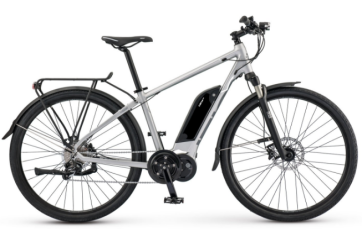 The IZIP line of bikes is included in a family of brands that is part of the world’s largest electric bike supplier, the Accell Group, which means you can count on quality, reliability and value.
The IZIPS have recently landed in Bicycle Sport Shop and have inspired me to test a work commute using the IZIP E3 Dash. I was eager to see if it would change how I felt about commuting by bike. At that point, the feeling was lukewarm at best. The 45-minute route to work is mostly false flats with a long uphill at the end leaving little room for chill riding. Unless I’m feeling extra spicy or outrunning a thunderstorm, I like to take my time and roll slow to places. Look around. Pedal at causal speeds. That behavior would never get me to the office day-to-day.
With the Dash, however, my day went like this:
I start out of the house in 50-degree weather and a little nervous I’m going to quickly overheat in what I’m wearing. A few blocks in, the crossing guard stands up from leaning on the fence to track me and the Dash, his head following my movement. I’m now clued-in that I’m blasting through the school zone and quickly calm down on the speed. Apparently, I’m too excited to be back on an electric bike.
The bike is smooth and, other than a gentle whir of the motor at times, relatively quiet. My old, Craigslist acquired bike at home sounds like a box of nails hitting a wall when riding over bumps, so it’s a dramatic improvement.
The stoplight two miles into the ride is usually where I furiously tear off a layer and start to pull in deeper breaths. But, my sweater and jacket combo is still cozy and I sit calm on the bike. Riding through the strip of industrial east side landscape, I kick up the IZIP’s motor from 2 to 4––MAX POWER. Now I’m ripping through the part of the ride with no traffic or pedestrians at a sturdy clip. It feels glorious.
Downtown is full of cars, but the bike paths are separated from traffic and the blocks swiftly fall behind me. At stop lights, I can hear everyone’s conversations. Much more soothing on the ears and soul than the callers on Tom Ashbrook’s On Point. I do a few extra circles around Butler Park and get to ride through a flock of grounded pigeons. They frantically disperse at my approach in the most delicious, cinematic city moment.
Finally, it appears. The long uphill on the way to work that I loathe. Normally I would be coaxing myself up the hill in a series of expletives while inhaling penny-flavored air. Nope. I climbed up like butter, baby. My thoughts stayed pure and I was even able to peer above the fence-line of the homes along the street for the first time. They have a killer view of the city.
I show up to work 35 minutes after leaving my house. 10 minutes faster than usual. Still wearing my jacket and sweater; sans the sweat-soak. Feeling downright luminous.
Lunch rolls around I can’t wait to ride around the hills in the neighborhood by the office. I push the bike’s limits and discover that if you’re at its threshold and try to do something else with your hands, the handlebars get decently wobbly. So, keep your hands responsibly on the bars while bombing hills.
My promise to meet someone by a certain time turns the commute home into a no-frills event. Jacket now in the backpack, weather up to 75 degrees, I power through the route without hesitation. Constantly pedaling, I reach the house and pop off the bike to hand it over to my visitor waiting on the porch. “You HAVE to get on this!”
I stand like a proud parent on the curb as they race up and down the block. After a few minutes of letting the sweater air out in my hands as they ride around, I’m able to put it on again and head out to dinner. I don’t feel grimy and need a few moments of water and stillness to recover from a pedal-mashing ride.
The day felt physically 100x more active than a typical day and mentally so much more peaceful. I can easily say I would do this on daily basis. Just me and Dash going around town––the chore of the commute transformed into a somewhat cathartic experience. Yeah, that sounds like a good life.
By Ashley Hitson
Ashley currently works at Bicycle Sport Shop as a designer. She’s looking forward to buying her next commuter bike.
A TEXAS MONUMENT
Former winners share their memories from one of the state’s most beloved events
Most anyone who’s raced the Pace Bend Road Race will likely agree that it’s one of those events where, if you had a memorable day, you’ll keep your race number.
You’ll tuck it away in a special place, like a sock drawer or a duffel bag, and eagerly wait to rediscover it one day. The number is a piece of paper, but it’s also a time capsule. You’ll rub the number’s waxy surface, and allow fond memories to wash over you.
The Bicycle Sport Shop-sponsored elite racing team, Super Squadra, has twice ridden to number saving worthy performances at Pace Bend. The team considers the event a Texas “Monument,” as important to a Texas bike racer as, say, Milan San Remo.
The race has stood on the Texas calendar for nearly two decades now, and the list of victors includes some of the fastest Texans to ever swing a leg over a bicycle. The February sun always seems to shine on the Pace Bend course, a just-difficult-enough six-mile loop on a peninsula surrounded by Lake Travis. And family and friends always come to watch.
If you win at Pace Bend, you’ll never forget how the race played out. Here, two former winners from Super Squadra, Phil Wikoff and David Wenger, recount their respective Pace Bend victories, in 2009 and 2013, and the moments that led them to the line.
To learn road racing tactics specific to the Pace Bend Road Race, attend Super Squadra’s seminar at Bicycle Sport Shop’s Lamar location this Wednesday, February 15th, at 6 p.m. Details & RSVP Here
Phil Wikoff’s one-raised arm
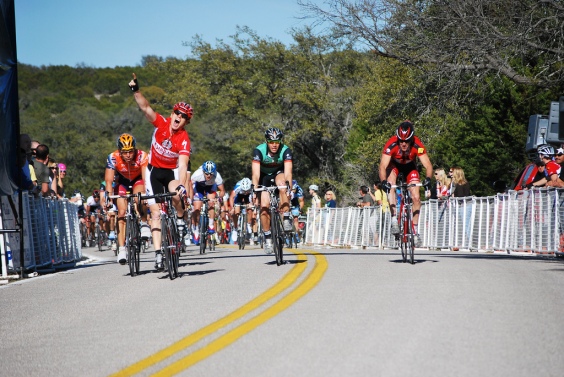
During the 2009 edition of the 80-mile long Pace Bend Road Race, the key moment for myself and our team occurred heading up the steep hill on the course’s backside for the penultimate time. The field was splintered with the leading group of 10 or 12 nearly a quarter mile ahead of the main field, and any number of riders in between grappling to regain the front group.
My teammates David Wenger and Steven Wheeler worked to bring the race back together, as my main sprint adversaries had to make the bridge on their own. As the team’s chosen sprinter for the day, I continued to sit back and watch, bottling up my aggression and saving my legs as my teammates sacrificed themselves. I knew I’d need to deliver at the line.
Under the beautiful afternoon sun that seems never to miss out on an edition of Pace Bend, the closing kilometers finally arrived. As I had done the prior laps, I mentally checked off the different landmarks that would guide my positioning. This false flat right hand bend leads to that sign which is followed by that left hand… and so forth. With my fellow teammates swirling around me and the favorites queuing up behind their own teammates, it was a fairly orderly affair heading into the final left hand bend.
I envisioned myself in fourth wheel coming out of the last corner, yet I found myself in third wheel on the two of the very strongest riders to ever race in Texas – Heath Blackgrove and former US Pro Champion Chris Wherry. They provided a perfect leadout, but due to the crosswind grinding uphill of Pace Bend’s new finish, I was able to jump for the line as their pace flagged around 150m to go.
I crossed the line and instantly my thoughts went to how surprised my teammates were going to be. Of the nearly 140 starters on Sunday, it is likely every single rider and team had a plan. For that one afternoon Super Squadra were the lucky ones for whom that plan panned out.
A bike throw, by David Wenger
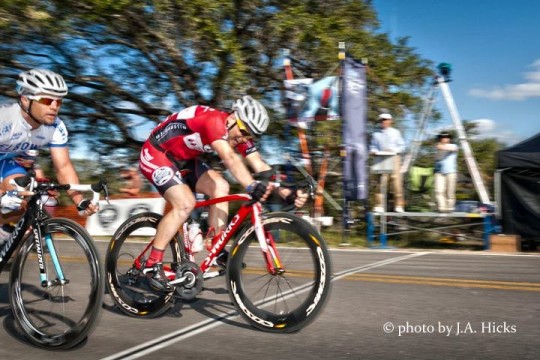
In 2013, the team’s belief in its ability to win, and my belief in myself, was key to our success. That year, the race finished on a long, slightly downhill drag after sharp right hand turn at the far end of the park. On the last lap a group of four leaders were still out of sight. On the final tailwind section of the race the Elbowz team went into full team pursuit mode on the course’s hard, rolling hills. Riders blew backwards through the pack, and out the back.
As we hit the kicker climb on the course’s backside for the last time, we caught the leaders and the race’s finale started in slow motion. Riders labored up the hill with far less grace than they had 3 hours earlier. I steadily started my effort and picked off riders as they blew up on the climb, eventually settling in toward the front of the group as the road flattened out. Our team’s three chosen finishers for the day, Shane Haga, Phil Wikoff, and myself were all riding in the top-10, and comfortable handling our bikes at high speed in the last bit of the race.
At one kilometer to go, Heath Blackgrove took over the pace setting for a fresh-as-spring Eric Marcotte, who were then both teammates on Elbowz. With the field riding in the gutter in a stiff crosswind, I slotted in two wheels behind Marcotte. It was one spot further back than I wanted to be, but not worth the extra energy fighting in the wind would cost me to move up during the final push to the line. In the last turn, I swung wide, as the rider in front of me finessed his brakes, and started my sprint, still 650 meters from the line and racing into a headwind. My strategy was to get to my max speed as fast as possible, then to hold onto it as long as I could.
About 100m after the turn, Blackgrove pulled off to get out of the way of the sprint. That put me on the far left of the road, by myself, and punching hard on the pedals. After coming over Blackgrove, I surged up to Marcotte who was on the far right side of the road and gave another surge to get my bars as far in front of his as I could. We barreled towards the finish at 42mph, side-by-side. At 200m to go, I had a tremor and thought the Mavic Wheels were coming off, but I just bit down and told myself to suck it up. I couldn’t see anyone else near my wheels and pushed for max speed the whole way to the finish. I crossed the line first.
By Ian Dille, David Wenger, and Phil Wikoff
Ian, David, and Phil represent the elite racing team Super Squadra.
Life at 700 Lumens
In sharing the childlike joy of riding bikes, I harbor some guilt and responsibility—most prominently, toward my brother-in-law, John.
Our first ride together was a few years ago, a casual spin around Austin during a Thanksgiving visit. We pedaled up to Mount Bonnell, and toasted the excursion with a pint of beer at a bar near my home. Then, we promptly crashed into each other. Undeterred, the following summer, when my family visited John and his family in the Boston area, John and I tried out Boston’s Hubway bike share system. He was hooked. He bought an annual bike share membership, and instead of driving to and from the train station for his work commute, he rode.
The next Thanksgiving, when John came back to Austin, he’d lost 20-pounds, his lightest weight since high school, and our casual spins morphed into full-fledged training rides. Instead of enduring his nearly two-hour train ride into the city for work, John had begun commuting by bike—a 40-mile ride from his suburban home in Upton, Massachusetts to his biotech job in Cambridge. To quicken his work journey, John eventually traded in the hybrid bike he’d been riding for a Trek Domane. He often leaves in the dark morning, and averages 17 mph on his ride into the city. Recently, my brother-in-law even shaved his legs.
Imagining John departing for his ride into work well before the sun rises, and feeling personally responsible for his well-being and safety on his bicycle, I recently gave him a Bontrager Ion 700 R headlight as a present. Knowing John would be riding with one of the brightest, most reliable, and easy to use bike lights available, well, it made me feel better—a lot better. I knew the wide and bright beam of the Ion 700 R headlight would more safely guide him on his journey to work, and he’d be well visible to other vehicles on the road.
I knew this because the Ion 700 R significantly changed my level of confidence riding in the early morning and late evening. The light is no burden to attach to your bike, with its diminutive size, and easy to mount and secure bracket (especially, the integrated computer/light mount on my 9 Series Trek Madone). I frequently use the Ion 700 R on my city bike while riding to social events in the evening. Upon arriving at my destination, I simply detach the light and slip it into a pants pocket.
The powerful light pumps out 700 lumens at its strongest setting, which is equivalent to the beam of a single car headlight and lasts for up to one and three quarters hours. This has made slipping out of the house for my own dawn patrol outings a regular part of my riding routine. I feel secure rolling from my driveway onto the darkened street, knowing that I have the equipment to effectively light the way in front of me. Plus, the light’s integrated USB rechargeable battery makes it an easy plug and play device.
During those times of day when the sun is just rising or is about to set, and a full light beam isn’t needed, the Ion 700 R can be switched to 3 lower light settings, or put on a flashing mode, which acts a super-powered alert to fellow road users.
A few weeks ago, John and his family came back to Austin, and we planned a ride out the South Walnut Creek Trail and around Decker Lake. With a family photo planned and toddlers and infant children to manage, we weren’t given much leash—a 9 a.m. deadline by which to return home. So we charged our Bontrager Ion 700 R lights, and aimed to be out the garage door by 6:30 a.m. We didn’t even bother to check whether the sun would have risen by then, or not.
By Ian Dille
Ian currently works as a freelance journalist and is a contributing writer for a variety of publications, including Outside magazine, Texas Monthly, and Bicycling. Ian is a founding member of Super Squadra and serves as the Team Manager.
Let’s Ride our Bikes to School—What a Great Idea!
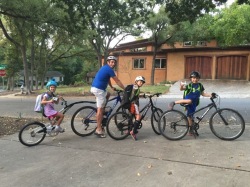
Have you ridden by your local elementary school during morning drop-off or afternoon pick-up and seen the long lines of cars with idling motors waiting? Crazy, right?
Local elementary schools are faced with a challenging safety issue caused by vehicle congestion during school drop-off and pickup times. Casis Elementary, located in the Tarrytown neighborhood, was motivated to find a solution that would be healthy and earth-friendly, but most importantly – increase safety. After learning of the success that another local elementary school, Dawson Elementary, had with a human-powered commuter solution, they discovered the HUB program from Saris. Used across the country in schools and workplaces, the HUB program provides a system to track people cycling or walking to school or a workplace that encourages transportation other than using an automobile.
The program works with a scan card that you use when you arrive at your destination, and is viewable from your online profile. In order to keep things fair, each trip is tracked the same regardless of mileage. If you live further away from the school, Casis encourages you to stop short of arriving to the school (a fourth of a mile away or greater) and walk or ride into school from there. To help with planning, they have a Safe Routes Map showing zones and street activity.
Charlotte and Maggie explain how to use the HUB Program at Casis
To encourage greater participation, Casis Elementary has instituted an incentive program. For example, every 10 scans gets a grand prize raffle entry, entry into the monthly drawing of a $10 Bicycle Sport Shop gift card when you reach 5 scans, pop up giveaways at the scan boxes, grade level challenges, and the announcement of “Hub Heros” which recognizes students who are making an effort.
Casis officially kicked off their Hub program, Casis Commuter Club, on September 20, 2016, and have had 207 students sign up within the first three weeks. Not only has the program improved traffic congestion around the school, the program encourages more exercise, reduces emissions, and helps enhance children’s self-esteem by making them responsible for getting to and from school on their own. The HUB tracking system also gives the school an idea of their environmental impact, with the below chart tracking the miles, pounds of CO2, calories, and gas saved from September 20 to October 17, 2016.
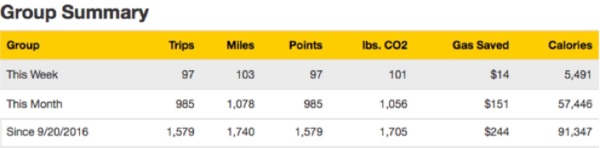
We are grateful to Casis Elementary for helping with our mission of getting more people on bikes more often and look forward to more schools and businesses adapting the program. Consider the Hub program for your school or business.
Learn more about the Saris Hub Program:
Bee Cave Store Grand Opening Celebration
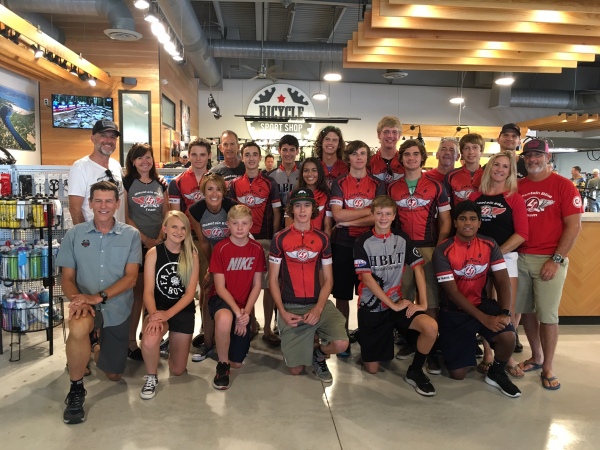
We’re happy to announce that our fourth store location on Bee Cave Rd. is now open! To mark the occasion, we had a celebration in conjunction with the Lake Travis Mountain Bike Team last weekend that included a raffle and silent auction. We extend our heartfelt thanks to all our donors, listed below, whose generosity helped us raise $2,768 for the team. The funds raised will go towards scholarships, clothing, and getting the team to competitions.
We were pleased to see so many members of the community and staff join us in supporting the team and our new store. Beverages were provided by Real Ale Brewing, food by Wholly Cow Burgers, and milkshakes by F’real. Several athletes provided great entertainment in a “Power to the Pedal” competition that measured their wattage output while riding Kickr trainers provided by Wahoo! Fitness.
We look forward to continuing to serve the Bee Cave, Westlake, and Lakeway area for years to come. Please visit us on 12005 Bee Cave Rd. for all your bike and service needs.


Ridden & Reviewed: Specialized Turbo Levo
40 years after the advent of the mountain bike, there is an exciting new development in the fat tire world every rider should experience – the Specialized Turbo Levo pedal-assist mountain bike! Determined to put it to the test, Bicycle Sport Shop headed out to Reimers Ranch with the Turbo Levo FSR Expert 6Fattie.
The Turbo Levo closely resembles the latest in the Stumpjumper category from Specialized and features full suspension, 27.5 plus tires, and a Command Post IRcc dropper seat post. All of this coupled with a rechargeable lithium-ion battery to power a pedal-assist motor with Eco (power saving), Trail (moderate assistance), and Turbo (full power) modes. The mode can be controlled with buttons on the down tube of the bike, but for the tech savvy rider there is a Mission Control app that allows you to manage the power use and fully control the Turbo technology system.
Initially skeptical of a mountain e-bike, our time at Reimers quickly changed our minds. Climbs were achieved effortlessly, flats were traversed quickly, and we were able to hit more of the trail in less time with less effort due to the 530 watts of pedal assisted power. It simply multiplies the power you put to the pedals, but you still ride it just like you would a non-powered bike. That doesn’t mean that skills aren’t necessary. We recommend you have a basic knowledge of how to ride a mountain bike and at least an intermediate skill level before hopping on a Levo, as the principles of shifting weight and properly handling the bike are important.
The Specialized Turbo Levo serves as a great option to help bridge the gap between ride partners with varying fitness and skill levels. If exploring a new trail, the Levo will help you cover more ground than you ever thought possible in one ride. It’s also a great for those moments when you’re pressed for time—like squeezing in a ride during your lunch break.
The Turbo Levo truly needs to be experienced first-hand. Bicycle Sport Shop has demos available for you to test ride. We’re also scheduling demos at Reimers Ranch, so check our calendar for details.
It’s important to note that the Levo and other pedal-assist mountain bikes are not legal to ride on many of our local trails. The only trail where they are allowed in the City of Austin is City Park, so don’t take them on Barton Creek or out to Walnut Creek. Travis County has no such restrictions and you may ride them at Reimers Ranch and Pace Bend, as well as on the LCRA managed trail at Muleshoe Bend, all three of which are great trails for pedal-assist bikes. Just like any other trail that you ride, always be respectful of other users and follow IMBA’s Rules of the Trail.
Check out the video below to see footage from our day at Reimers!
Beginning Racer Program
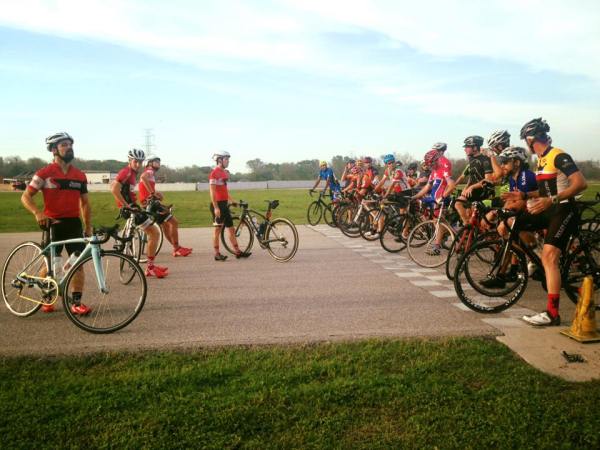
Have you been a Driveway Series spectator but interested in finding out what its like out there on the track? Then join us at the Beginning Racer Program!
Sponsored by Bicycle Sport Shop and taught by the elite racing team Super Squadra presented by Eliel Cycling, The Beginning Racer Program will teach you the necessary skills for your race debut. The five clinic series is designed to give you a baseline in fundamental pack skills, cornering, improving situational awareness and pack positioning, and sprinting basics. Since the clinics are not weekly, you can hop in a race on the off week and come to the next clinic with questions.
Participation varies from clinic-to-clinic, but overall what brings people is an excitement to learn a new way to have fun on their bike. Most have never raced a crit before, while some want to brush-up on what they do know. You’ll get the most out of attending the full series, but you have the option to drop in and attend any clinic for a specific skillset.
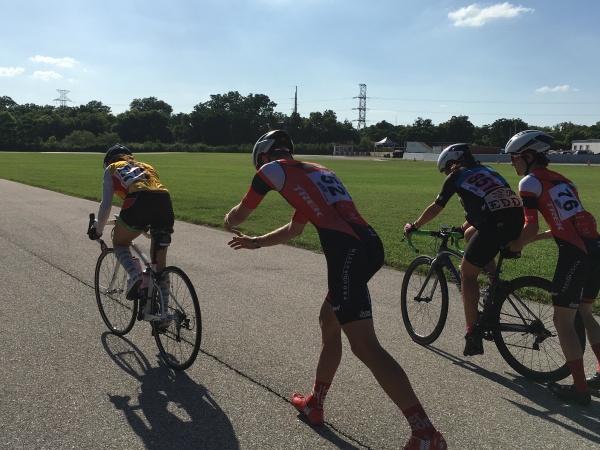
The Super Squadra team competes locally, in the state-wide TXBRA series, and at select events across the country. They have a wealth of experience and talent on their team. They’re helpful, knowledgeable, and patient. Each clinic begins with an explanation of the skill for the day, a warm-up, and then drills that they’ve perfected in order to relay the basics of that skill. Each clinic ends with a practice race. After the clinic, stick around for complimentary beer and watch Super Squadra compete in the Pro 1/2/3 Men’s race.
If you’ve ever wanted to race the Driveway, sign-up for the Beginning Racer Program. It will help you transition from recreational rider to bike racer with ease.
Schedule:
July 21: Basic Pack Skills
August 4: Cornering
August 18: Improving Pack Awareness
September 8: Sprinting Basics
October 6: Bringing it all Together
Use discount code BRPFriend20 (for $20 per clinic) and BRPFriend100 ($100 for the series).
A Tale of Three Treks
Bicycle Sport Shop’s elite racing team, Super Squadra presented by Eliel Cycling, is racing on Trek bicycles and Bontrager shoes and helmets this year. The team competes locally, in the state-wide TXBRA series, and at select events across the country, and also holds cycling clinics throughout the year the weekly Driveway Series race. Each team member was given the opportunity to choose their own bike from Trek’s wide selection of road racing machines.
Here, three of the team’s top racers explain why they chose the bike they’re on, how they made it their own, and how they’re liking it so far.
Kyle Anderson
Age – 23
Occupation – Student / Bicycle Mechanic
Bike – Emonda SL with Shimano Ultegra drivetrain
Hailing from the wind torn plains of Wichita Falls, Kyle Anderson is a new addition to the Super Squadra team for 2016. An already established Category 1 racer, Kyle is a perennial top finisher in the TXBRA overall strandings and brings a depth of experience to the team.
“I chose the Emonda SL 6 because as a college student that works at a bike shop money is tight and I wanted a bike that was affordable and I would still be able to race competitively. With race wheels it is 15 pounds and light enough to fly up the hills with ease. Not that we have many of those in North Texas!”
“What sticks out most is how smooth the ride feels. It has bit longer chainstays that smooth out the rough chip’n seal of North Texas roads. And although its has a smooth ride it’s still very responsive when I jump from the saddle and hit corners hard. These two aspects of the bike really stood out at the Sealy Stage race, where the country roads were rough, and the criterium had three very tight corners and points sprints every 15 minutes. I was able to roll every breakaway and pull out a 2nd overall atop the Emonda.”
“From the standard set up, I upgraded the handlebars and stem to Zipp Service Course Sl, and put a Fizik Volta R1 saddle on. These upgrades were all for comfort and personal preference. My girlfriend also added some very adorable cat stickers.”
Devin Carroll
Age – 30
Occupation – Mechanical Engineer / Project Manager
Bike – Emonda SLR with Shimano Di2 Ultegra drivetrain
The Super Squadra team’s reigning king of #dadwatts, Devin is regarded as one of the fastest sprinters in Texas. You can regularly find him sporting an orange leaders jersey in the Pro,1,2 race at the Driveway Series, or standing atop a podium holding his new daughter, Everett.
“I chose the Emonda SLR because I wanted a machine that was fast on race day, and versatile for training. My riding life consists of racing, long and adventurous weekend rides, and lots and lots of early morning trainer time. This amounts to a very diverse set of demands for a race bike—speed, performance and durability, and a high level of comfort. Of course, the classic styling and matte powder blue paintjob didn’t hurt either.”
“I really like round classic bend handlebars. Something about that style of handlebar just feels right in my hands. I’ve also been running a gold KMC chain on my race bikes for years now. It counts for style points, I suppose, and it helps me stay on track with keeping the bike clean. It is well known within the team that my bike is the cleanest—ALWAYS.”
Phil Wikoff
Age – 35
Occupation – Bio-scientist (formerly, brewmaster for Eastciders)
Bike – Madone 9 Series with Shimano Di2 Dura-Ace drivetrain
Phil is a former TXBRA overall winner and a father of two, who remains competitive at national-level criteriums. His fashion forward taste is unrivaled throughout the state.
“I wanted the newest, fastest, most custom bike Trek made. See: Madone Project 1. Through the P1 program, I was able to get the H1 geometry that in general is longer and lower on the front end. For maybe the first time ever, I got the correct size ‘large’ bike that I need.”
“In addition to the geometry I needed, I selected shock orange paint with only an electric pink 72 font TREK logo. The amount of comments and adoration I receive from anyone who gazes at the bike, tells the whole story. Once you start staring at the racy lines, with all the integration of the Shimano Di2 components, rendered in that infamous orange paint, you are hooked. I am hooked. The Madone not only looks fast, it is fast.”
Three questions with a Beginning Racer
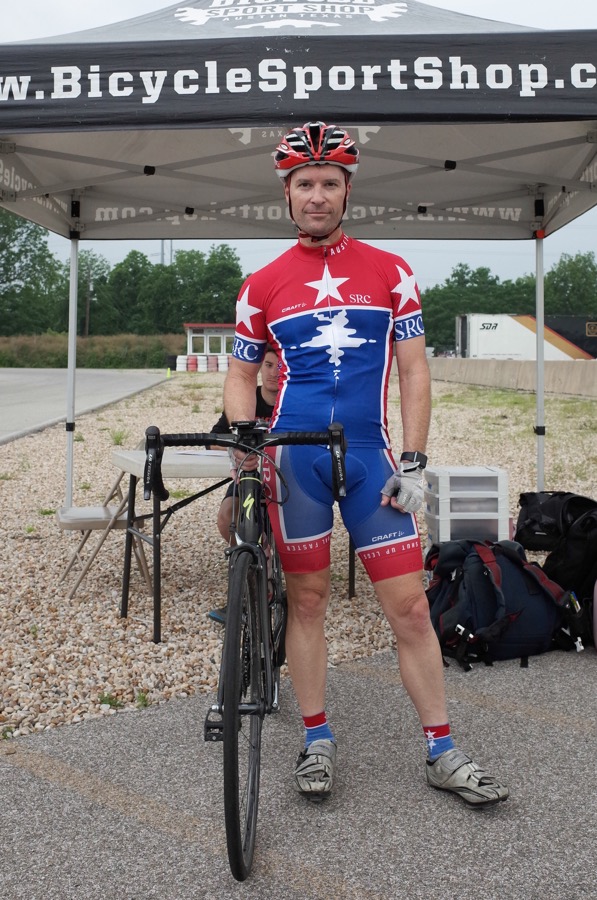
Why is Thomas Lea of Steiner Ranch Cycling stoked? Because he just successfully completed his third Beginning Racer Program clinic, in which he learned the finer points of riding a fluid echelon and handling his bike in close quarters. (Also, he won a $150 gift card raffled to clinic attendees by clothing company Eliel Cycling.)
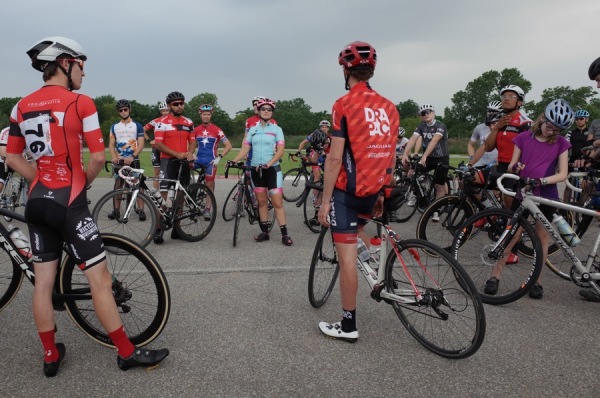
Bicycle Sport Shop’s Beginning Racer Program is a progressive series of five cycling clinics, aimed at equipping cyclists with the skills and knowledge necessary to race their bikes with confidence. The clinics are led by the Bicycle Sport Shop-sponsored racing team, Super Squadra, and held during the Driveway Series races.
The next Beginning Racer Program is on May 19, and will focus on sprinting. You can register for the clinic, here, and also earn a chance at winning a $25 gift card donated by Bicycle Sport Shop. This Q&A is the first in a series of brief Beginning Racer profiles, exploring what drew these riders to the competitive side of the sport.
How did you get into cycling?
I had a couple friends that were crazy into cycling. I used to make fun of them, because it seemed like that’s all they did. That was 11 years ago, when I was 35, and now cycling is all I like to do. I ride five days a week, at least. Saturday and Sunday are our club rides. Those are pretty standard. Then, I do a lot of indoor training on my KICKR during the week, intervals and stuff.
Tell us about your first race?
I never really wanted to race, but we have a couple guys on the team who’re really fast, and doing well in the TXBRA series. One of those guys is moving, though, and I’m currently the president of the club, so I figured I should step up and participate, and try and improve the club’s standing in the TXBRA rankings. My first race was last year at the Pace Bend road race. I could’ve done a little better, I placed 13th in our age group, the Master’s Category 4/5 race. It was raining, so that added an element of drama. But there weren’t any other incidents, everything worked out.
So what motivated you to do the BRP?
One of the many reasons I haven’t been doing a lot of racing is because I’m terrified of crashes. I figured I could pick up some really great bike handling skills at these clinics, and that would help keep me safer in criteriums and other races. I really like the cornering drills. That really changed the way I take turns at speed, I realized I was doing that completely wrong. Also, the three other guys who’re doing these clinics and myself now practice bumping into each other on our team rides. Everyone looks at us like we’re nuts, but it’s helped us get comfortable riding really close to other people, seeing that it’s not a big deal, and not panicking.
 It's Time To Ride!